
BANK OF ALBANIA
PRESS RELEASE
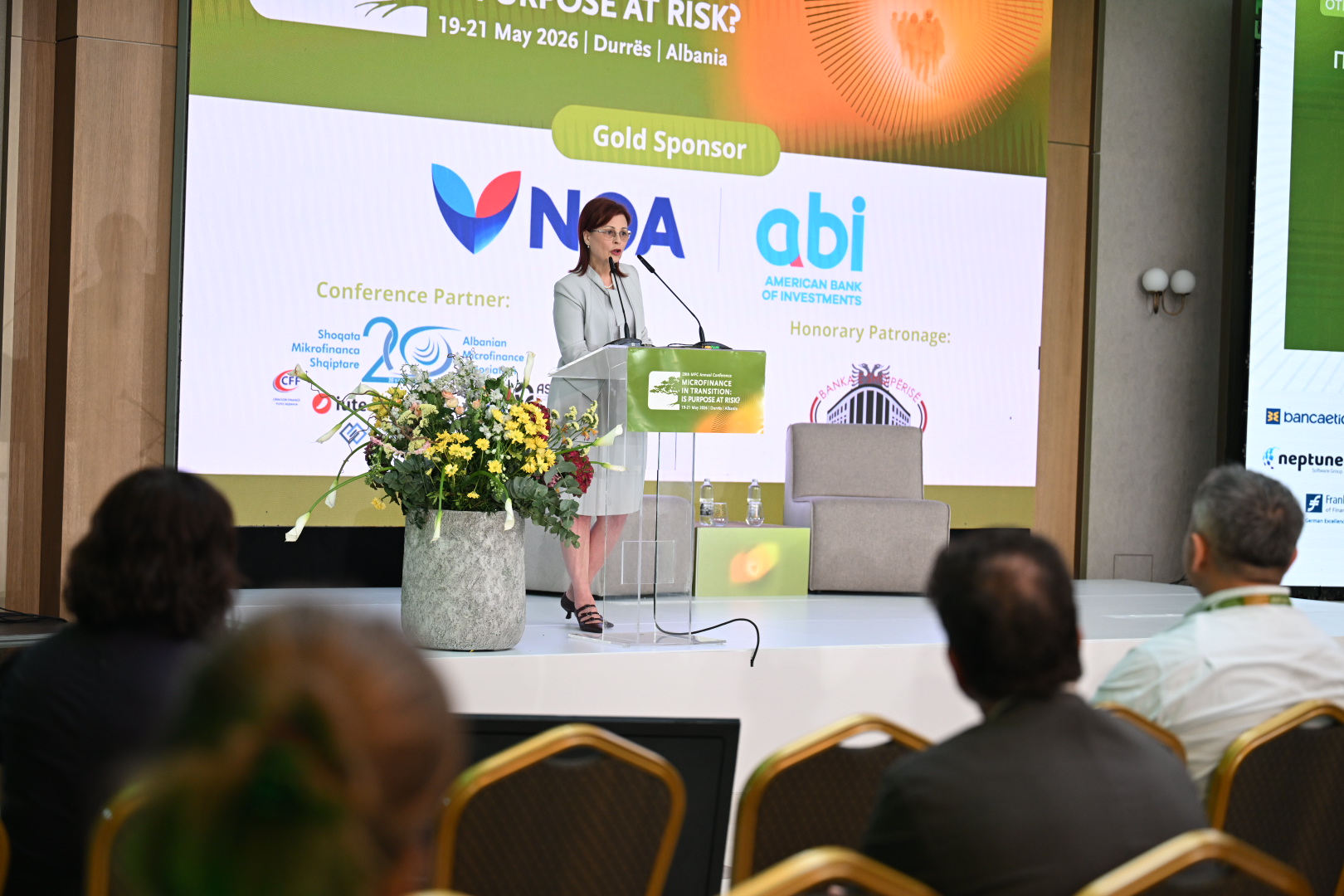
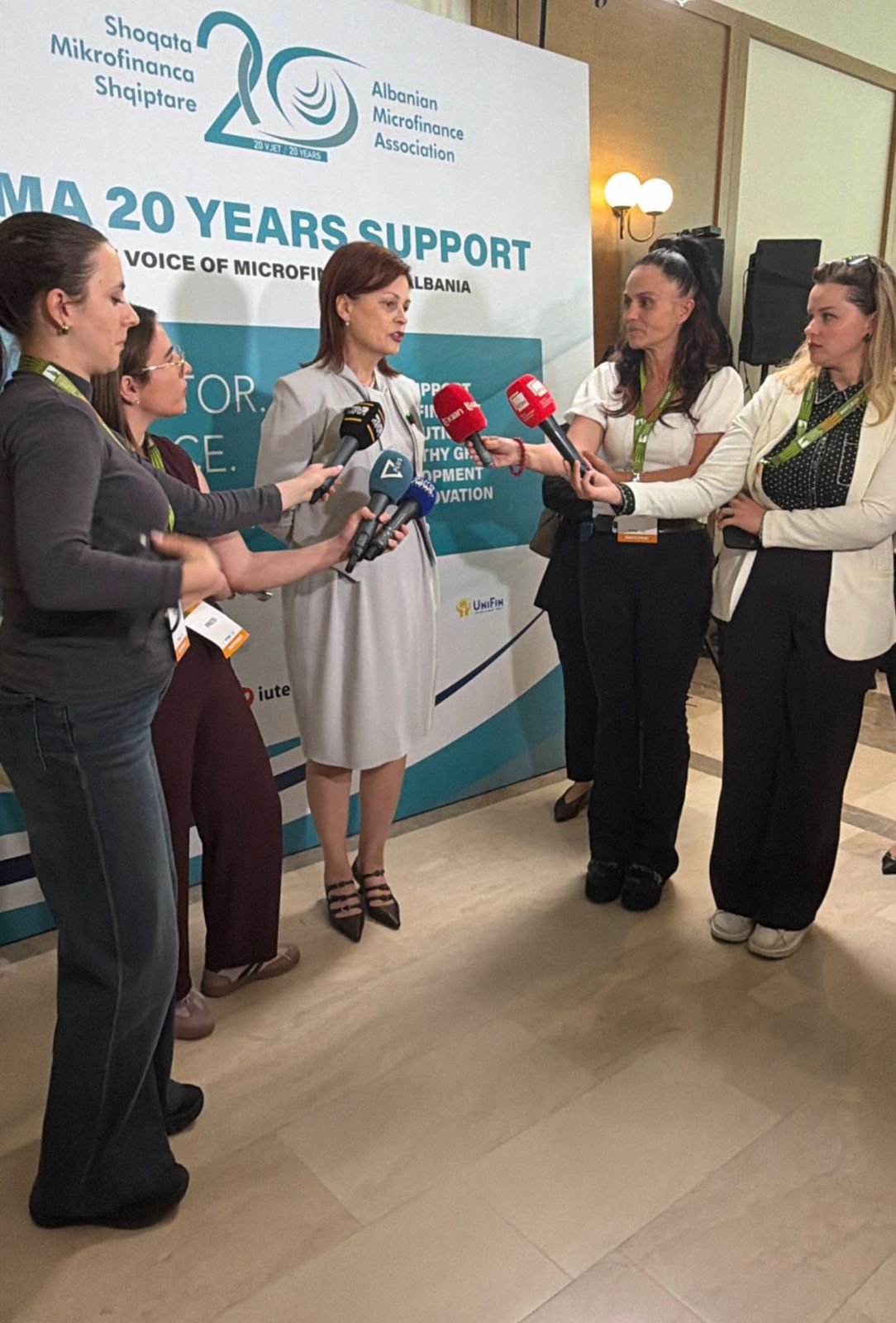
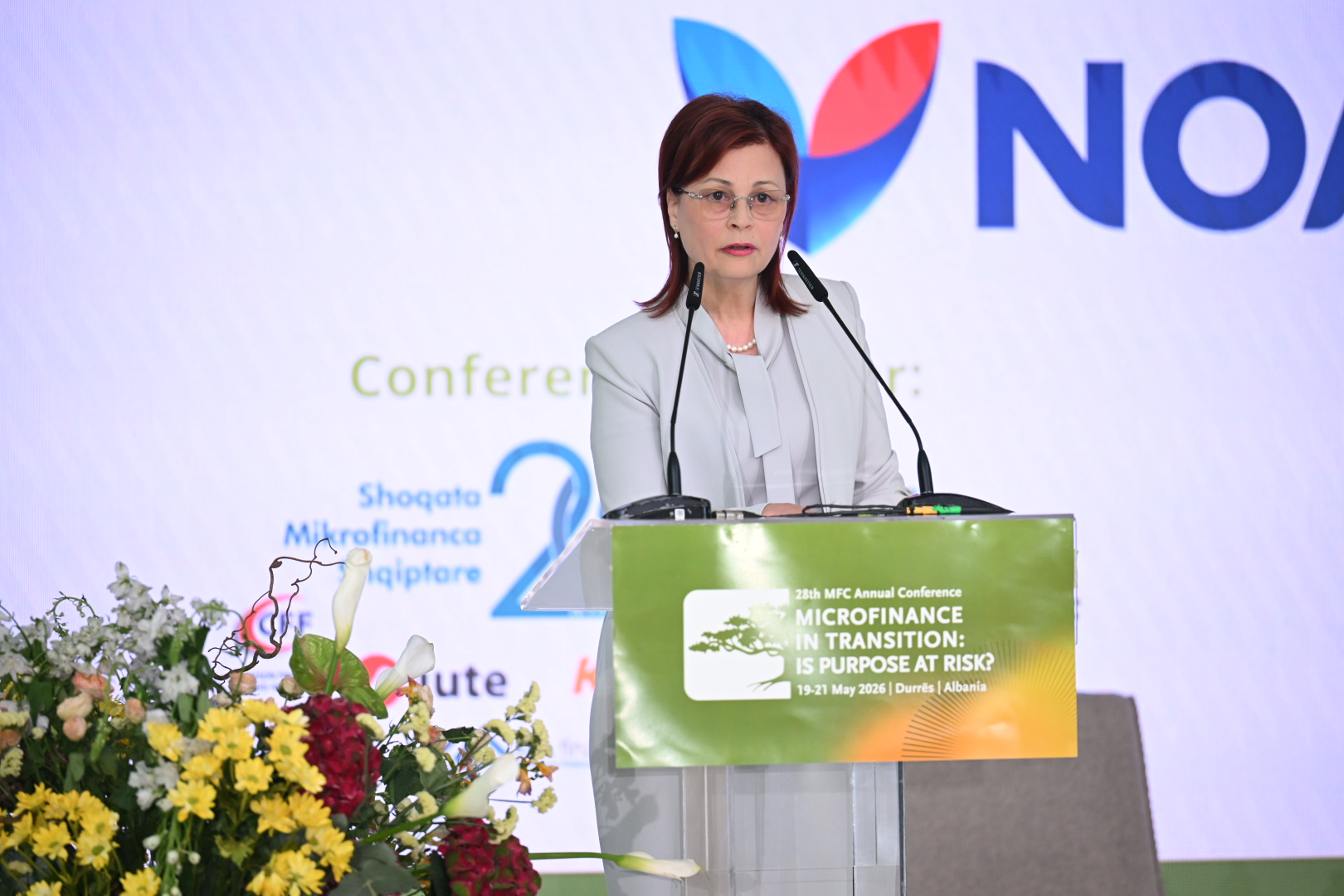
Deputy Governor Ahmetaj: Keynote address at the MFC Annual Conference on “Microfinance in transition: Is purpose at risk?’
Publication date: 20.05.2026
Distinguished organizers,
Esteemed participants,
Allow me, at the outset, to express my sincere appreciation to the organizers for their kind invitation, which I am pleased to accept.
This Conferences provides a good opportunity to reflect on the role of microfinance in economic and social development, and particularly on the important contribution of the Albanian Microfinance Association, as a professional and active representative of its members.
Before proceeding further, I would also like to pay tribute to the late Brunilda Isai, a visionary and deeply committed leader of this Association. Her dedication, professionalism, and tireless efforts have left a lasting mark on the development of the microfinance industry in Albania. Her legacy will continue to inspire her colleagues and the wider financial community for years to come.
Dear guests,
Microenterprises account for around 90% of enterprises in Europe and are therefore crucial to employment creation, economic growth, and investment. Yet, access to finance has remained one of the principal constraints to their development.
Microcredit emerged as an instrument to address this constraint, rooted in the concept of inclusive development, which seeks to ensure that low-income groups and developing economies are not excluded from financial services. Early microcredit programs were largely supported through public funding from advanced economies.
However, initial evidence did not demonstrate the expected outcomes in terms of income growth, educational attainment, or women’s economic empowerment.
Various analyses identified several structural weaknesses, including insufficient stakeholder involvement in policy design, limited understanding of small enterprise dynamics in product development, and a lack of flexibility in traditional microcredit instruments. These considerations contributed to the evolution of the model from microcredit to a broader and more comprehensive framework: microfinance.
Although often used interchangeably, microcredit and microfinance are not synonymous.
Microfinance refers to regulated financial institutions that provide a broader range of financial services, with ownership increasingly shifting to the private sector. This transition has supported greater product diversification and institutional development beyond the traditional scope of microcredit.
Beyond lending, microfinance institutions also provide financial advisory services, which are particularly important for segments with limited financial literacy and restricted access to formal banking systems. Unlike commercial banks, microfinance institutions primarily serve low-income households, often operating in rural and informal sectors where advisory support is essential for responsible financial inclusion.
Microcredit remains a core instrument within microfinance, aimed at supporting income-generating activities and productive investment among underserved populations. Over time, empirical evidence has demonstrated its potential as a mechanism for economic mobility, social advancement, improved educational outcomes, and pathways out of poverty.
However, to ensure the long-term sustainability of microfinance’s transformative role, several fundamental considerations must remain in focus.
In what follows, I will briefly address some of them.
- First consideration: the business model.
Microfinance institutions must operate under a client-centric business model, where the client relationship is seen as a long-term engagement rather than a series of isolated transactions. Institutional value creation should be assessed over time, rather than at the level of individual credit transactions.
- Second consideration: core mandate
Microfinance must remain anchored in its core mandate of financing micro and small enterprises and supporting productive economic activity. A disproportionate shift toward consumer lending represents a deviation from this mandate and may undermine both institutional purpose and regulatory intent.

Consumer lending, while addressing legitimate household needs related to quality of life and consumption smoothing, carries distinct risk characteristics. International experience has shown that, in certain contexts, it may contribute to over-indebtedness and, in extreme cases, to practices inconsistent with sound lending standards.
Accordingly, while consumer credit may have a place within a diversified service offering, its development must remain proportionate and carefully managed to avoid both social risks for borrowers and reputational risks for the microfinance sector itself.
- Third consideration: the use of technology
Portfolio quality remains the most reliable indicator of institutional soundness and sector credibility. In this regard, access to reliable data infrastructure and the effective use of technology are increasingly pivotal. Digital financial services, including mobile-based lending, offer significant potential to expand financial inclusion, particularly in remote and underserved areas. However, their effectiveness depends on robust data systems, sound market understanding, and adequately qualified human capital.
In parallel, effective risk management requires strong internal governance frameworks, rigorous credit assessment methodologies, and continuous supervisory oversight. Regulators must ensure that prudential standards advance in step with technological and market developments.
These elements, combined with sustained financial education initiatives, are critical to ensuring that microfinance continues to fulfill its developmental mandate without generating unintended social consequences.
In recent years, the microfinance sector in Albania and the region has faced increasing complexity, driven by market expansion, the diversification of actors, and evolving competitive dynamics. Additional challenges have also arisen from the requirements of the European integration process.
Nevertheless, one of the most significant challenges remains safeguarding public trust and reputation, which are fundamental to the sector’s legitimacy and effectiveness.
In response, the Bank of Albania has introduced a series of regulatory measures, including caps on effective interest rates and penalty charges. These measures aim to strengthen consumer protection, improve access to finance, and enhance credit quality within non-bank financial institutions, particularly in the microfinance segment, which typically exhibits higher levels of non-performing loans.
Further regulatory initiatives have focused on strengthening risk management frameworks and enhancing transparency in client relationships. These reforms have been accompanied by continuous and structured engagement with market participants.
In parallel, the Bank of Albania has adopted a more selective licensing approach, ensuring that only institutions demonstrating sound governance, market understanding, and operational capacity are licensed to operate. Supervisory actions have also been taken to address underperforming weakly reputed entities, thereby reinforcing market discipline.
The Bank of Albania has consistently promoted transparency, the avoidance of inappropriate business models, and the strengthening of financial literacy. It is crucial to emphasize that financial inclusion is based not only on the right to information, but also on the corresponding responsibility to meet contractual obligations.
Looking ahead, further legislative initiatives are being considered, to ensure a clearer institutional separation between lending activities conducted by non-bank entities, and the management of non-performing loans. The objective is to mitigate potential conflicts of interest and enhance market transparency.
Beyond regulatory and technical considerations, it must be reaffirmed that the core mission of microfinance is to provide an accessible financial alternative and a form of social and economic support for segments with limited access to the formal financial system.
No regulatory framework, no matter how well designed, can fully achieve this objective without the commitment, integrity, and responsible conduct of market participants.
In conclusion, the Bank of Albania considers the Microfinance Association a key institutional partner in advancing regulatory reforms, supporting the modernization of the sector, and facilitating constructive professional dialogue on policy developments and industry challenges.
I would like to close by acknowledging the contribution of the microfinance sector to the financial system. With greater transparency, strong governance, and an appropriate balance between commercial sustainability and social responsibility, I am confident that the sector will continue to develop on a sound and sustainable long-term trajectory.
 Linkedin
 X
X
 Facebook
 Instagram
 Flickr
 Albanian Money App
 RSS
RSS
 Subscribe
 Contact
 Feedback